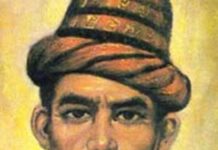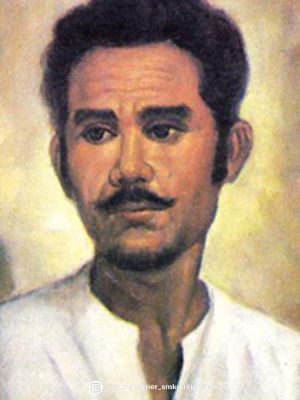
Thomas Matulessy also known as Kapitan Pattimura or Pattimura is an Indonesian national hero from Maluku. Pattimura was born in Haria, Saparua, Central Maluku on June 8, 1783 from the Matulessy family. His father’s name is Frans Matulessy and his mother’s name is Fransina Silahoi. Before taking on the resistance against the VOC he had a career in the military as a former British Military sergeant. His name was later known for leading the Maluku people’s resistance against the Dutch through the Pattimura war.
Since the 17th and 18th centuries, a series of armed resistance against the Dutch (VOC) took place due to the oppressive practices of Dutch colonialism in the form of trade monopoly, hongi shipping, forced labor and so on. This oppression is felt in all aspects of people’s lives, both in terms of socio-economic, political and social-psychological aspects.
For two hundred years the people of Maluku have experienced disunity and poverty. The people of Maluku produce cloves and nutmeg for the world market, but the majority of the people do not experience any economic benefits. Instead of getting benefits, the Maluku people suffered even more from various policies such as heavy taxes in the form of mandatory and contingent surrender and economic blockades that isolated the Maluku people from other Indonesian traders.
In the second phase, the British occupation of Maluku in 1810 – 1817 had to end on March 25, 1817 after the Dutch returned to control the Maluku region. The Moluccan people firmly rejected the arrival of the Dutch by making the “Daily Proclamation” and “Hatawano’s Objection”. The Haria Proclamation was compiled by Pattimura.
When the Dutch government began to impose its power through Governor Van Middelkoop and Resident Saparua Johannes Rudolf van der Berg, the armed resistance of the people of Maluku broke out. Deliberations and consolidation of forces were held where the forums agreed on Pattimura as the great captain who led the struggle. On May 7, 1817 at a general meeting in Baileu Negeri Haria, Thomas Matulessy was confirmed in a traditional ceremony as “Kapitan Besar”.
After being appointed captain, Pattimura chose several of his assistants who were also knights, namely Anthoni Rhebok, Philips Latimahina, Lucas Selano, Arong Lisapafy, Melchior Kesaulya and Sarassa Sanaki, Martha Christina Tiahahu, and Paulus Tiahahu. Pattimura with Philips Latumahina and Lucas Selano raided the Duurstede fort.
The news about the fall of the Duurstede fort into the hands of the Pattimura troops and the extermination of the Dutch people, shook and confused the Dutch government in Ambon city. Governor Van Middelkoop and commissioner Engelhard decided to send a large military force to Saparua under the command of Major Beetjes. The expedition was later called the Beetjes expedition.
Knowing this, Kapitan Pattimura immediately arranged battle tactics and strategies. The people’s troops of about a thousand people were organized in defense along the coast starting from Haria bay, to Saparua bay. Pattimura and his troops succeeded in defeating Beetjes and his soldiers.
On May 20, 1817 a giant meeting was held at Haria to hold a statement of determination to continue the struggle against the Dutch. The commemoration of this determination is known as the Portho Haria Proclamation which contains 14 articles of statement and was signed by 21 Patih Kings from the islands of Saparua and Nusalaut. This proclamation raised a fighting spirit that encouraged the growth of battle fronts in various places, even as far as North Maluku.
On 4 July 1817 a strong fleet led by Overste de Groot headed for Saparua with the task of carrying out vandalism. The whole country on the Hatawano peninsula was scorched to the ground. Tactics for negotiations, surprise attacks, acts of vandalism, and pitting one against the other were carried out one after another. The Dutch also launched a policy of betrayal against Pattimura and his assistants.
On November 11, 1817, accompanied by several traitors, Lieutenant Pietersen succeeded in ambushing Pattimura and Philips Latumahina. The warrior figures were finally arrested and ended their service at the gallows on December 16, 1817 in the city of Ambon. For his services and sacrifices, Kapitan Pattimura was confirmed as a hero of the struggle for independence by the government of the Republic of Indonesia. Indonesian national hero.